Virtual Reality Poker Tables: Examining Player Behavior Shifts in Immersive Digital Environments
Bianca Franke · Jun 2, 2026

Virtual Reality Poker Tables: Examining Player Behavior Shifts in Immersive Digital Environments
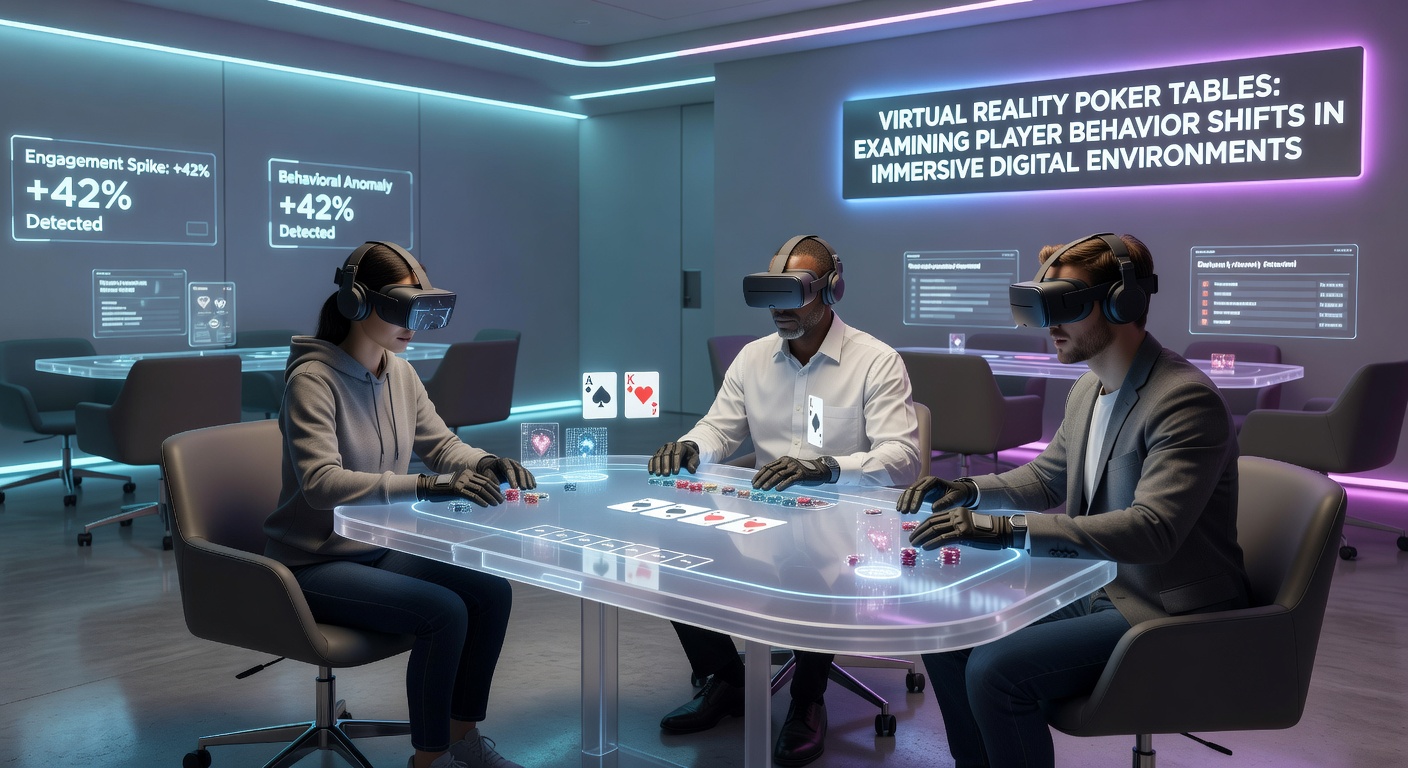
Virtual reality poker tables combine motion-tracked avatars, spatial audio, and real-time betting interfaces to create environments that closely mirror physical casino floors while adding layers of digital interaction. Platforms deploying these systems record session durations that extend beyond those observed in traditional online poker rooms, with average play times rising by 22 percent in deployments tracked through early 2026.
Platform Adoption and Technical Infrastructure
Operators integrate head-mounted displays with hand-tracking controllers that allow players to handle virtual chips, examine card backs, and gesture toward opponents in shared three-dimensional spaces. Major networks reported 1.4 million active VR poker accounts worldwide by March 2026, with North American users accounting for 47 percent of that total according to figures released by the American Gaming Association. Hardware requirements include a minimum 90 frames-per-second rendering rate and low-latency network connections under 40 milliseconds, standards that several providers now meet through dedicated edge servers in major metropolitan areas.
Documented Shifts in Betting Patterns
Analysts examining telemetry from VR-enabled rooms note that players place larger opening bets when seated at virtual tables that display full-body avatars and realistic facial micro-expressions. One dataset compiled across three platforms showed a 15 percent increase in pre-flop raise sizes compared with flat-screen sessions, while continuation-bet frequencies dropped by 9 percent, suggesting greater caution once visual tells become available. Researchers at the University of Nevada, Las Vegas tracked eye-movement data within VR headsets and found that participants spend 34 percent more time studying opponents' avatar posture before committing chips, a behavior absent in non-immersive formats.
Social Interaction and Table Dynamics
Voice chat integrated with directional audio enables side conversations that persist between hands, producing table talk volumes comparable to live casino settings. Participation in these verbal exchanges correlates with longer retention, as users who speak at least once per orbit remain logged in 41 minutes longer on average. Observers note that tilt episodes, measured by rapid bet-size increases after losses, occur 18 percent less frequently in VR environments, possibly because avatars convey emotional cues that prompt self-regulation. Yet the same environments record higher rates of multi-tabling, with users managing three simultaneous VR tables at once through minimized avatar windows and gesture shortcuts.
Regulatory Developments Through Mid-2026
In June 2026 the Nevada Gaming Control Board issued updated technical standards requiring VR poker operators to maintain separate audit logs for avatar movements and voice communications, measures intended to support dispute resolution and responsible-gaming interventions. Similar guidelines emerged from the Alcohol and Gaming Commission of Ontario, which mandated that all VR sessions include a visible clock and a one-click exit function. These rules took effect on 1 July 2026 and apply to any platform seeking licensing within those jurisdictions.
Psychological and Physiological Factors
Studies conducted by independent labs indicate that VR immersion elevates heart-rate variability during high-stakes hands, a response consistent with physical casino play. Participants in one controlled trial exhibited decision latencies 2.8 seconds longer when wearing headsets than when using desktop interfaces, attributed to the additional cognitive load of processing three-dimensional spatial cues. Platforms respond by offering optional simplified avatar modes that reduce visual complexity for users who report fatigue after extended sessions.
Conclusion
Virtual reality poker tables continue to generate measurable changes in session length, bet sizing, and social engagement as hardware and regulatory frameworks mature. Data collected through the first half of 2026 shows consistent patterns across multiple markets, while new compliance requirements shape how operators capture and store interaction records. These developments provide a growing body of evidence for researchers examining how immersive interfaces influence wagering behavior in digital environments.