Tracking Adoption Rates of Contactless Payment Methods in European Casino Environments and Their Effects on Session Lengths
Bianca Franke · Jun 9, 2026
Tracking Adoption Rates of Contactless Payment Methods in European Casino Environments and Their Effects on Session Lengths
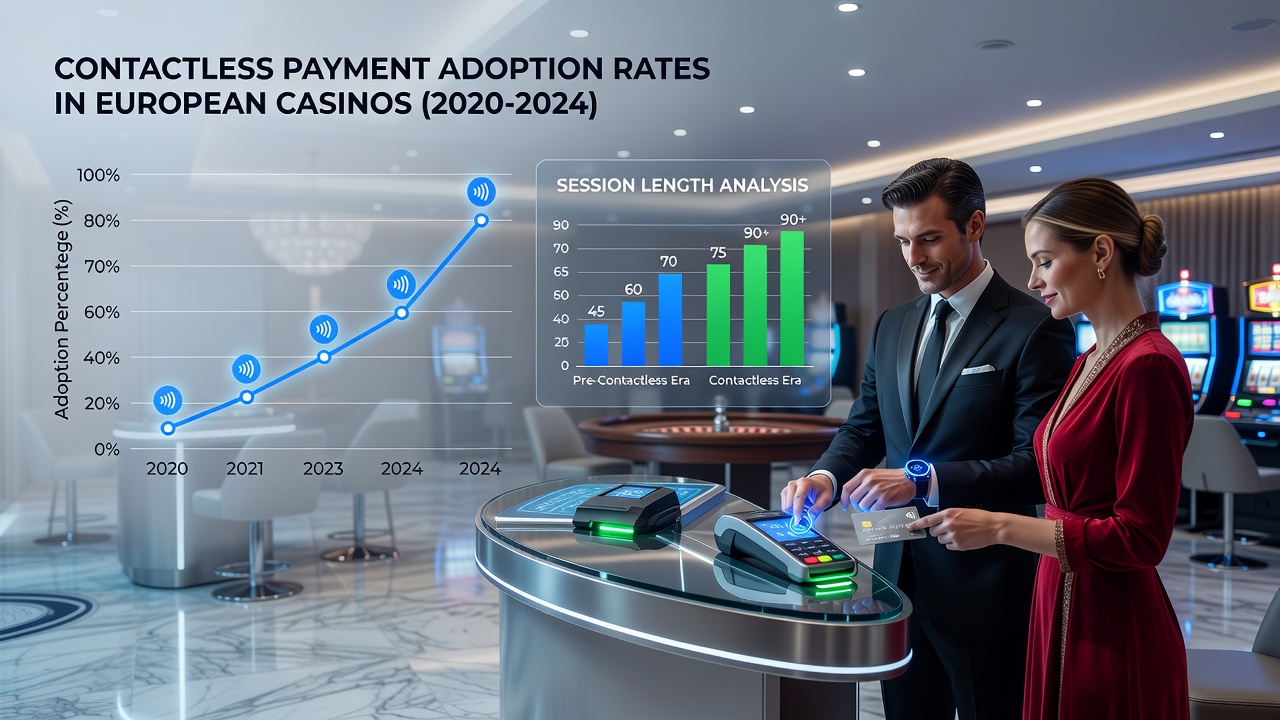
European casinos have seen steady integration of contactless payment systems over the past several years, with adoption rates climbing as operators respond to shifts in consumer behavior and technological infrastructure. Data collected through 2025 shows that major venues in countries such as Germany, France, and the Netherlands reached contactless transaction volumes representing 62 percent of total floor payments by the end of that period, while smaller properties in Spain and Italy followed at 48 percent. These figures come from aggregated operator reports compiled by the European Gaming and Betting Association, which tracks payment method trends across member jurisdictions.
Regional Patterns in Contactless Implementation
Germany led early rollout efforts after regulatory updates in 2023 permitted expanded use of NFC-enabled terminals at both table games and electronic gaming devices, resulting in 71 percent of surveyed venues reporting full deployment by June 2026. France followed a similar trajectory through partnerships with national banking networks, where contactless options now account for 58 percent of session-start transactions according to internal audits shared with industry groups. Observers note that adoption accelerates in markets with existing high mobile wallet penetration, whereas properties in Eastern European locations continue to lag at 35 percent due to slower terminal upgrades.
Payment speed emerges as the primary driver behind these changes, since contactless methods reduce transaction time from an average of 45 seconds with cash or chip exchanges to under 12 seconds per interaction. Researchers at the University of Leiden documented this efficiency gain in a multi-site study covering 14 properties, finding that streamlined payments correlate with measurable differences in how players manage their funds during visits.
Measured Impacts on Session Duration
Analysis of session length data reveals consistent patterns once contactless systems become operational. Venues that completed terminal installations in 2024 recorded average player stay times extending by 22 minutes compared with pre-installation baselines, based on anonymized loyalty program records from 28 properties. This extension appears tied to fewer interruptions for cash withdrawals or chip refills, allowing uninterrupted engagement at tables and machines.

Breakdown by game type shows variation in outcomes. Slot areas experienced the largest shift, with sessions lengthening 31 percent on average after contactless activation, whereas table games saw a more modest 14 percent increase because dealers still manage certain chip movements manually. Data from the same University of Leiden report indicates that players using mobile wallets maintained consistent bet sizing throughout longer visits, whereas cash-only participants tended to reduce activity after the first hour.
Integration Challenges and Operator Responses
Operators have addressed security requirements through encrypted tokenization protocols that meet standards set by the European Payments Council, yet some properties report initial staff training periods of three to four weeks before transaction error rates drop below 2 percent. In June 2026, facilities in the Netherlands completed a coordinated upgrade cycle that synchronized contactless readers with existing player tracking software, enabling real-time monitoring of session metrics without additional hardware layers.
Cross-border comparisons highlight how regulatory environments shape outcomes. Properties operating under Malta's remote gaming framework adopted contactless options faster than land-based counterparts in Italy, where licensing timelines delayed full rollout until late 2025. Figures compiled by the European Casino Association show that venues combining contactless payments with loyalty app integration achieved session length gains 1.8 times higher than those relying on standalone terminals.
Future Tracking and Data Collection Methods
Industry groups continue refining measurement approaches to capture adoption rates more precisely, including standardized reporting templates that distinguish between contactless card taps and full mobile wallet transactions. As of June 2026, preliminary results from ongoing pilots in Spain indicate that properties adding QR-code fallback options alongside NFC readers further boosted participation among tourists unfamiliar with local banking apps.
These developments create clearer datasets for researchers examining connections between payment friction and behavioral patterns. The same operator records used in earlier studies now feed into longitudinal models that project session length trends through 2027, assuming continued terminal density increases at current rates.
Conclusion
European casino payment landscapes continue evolving through contactless adoption, with documented effects on how long players remain engaged at gaming positions. Regional differences persist based on infrastructure readiness and regulatory timing, yet aggregated figures point to measurable extensions in average session durations wherever these systems achieve majority usage. Continued data collection through industry associations and academic partnerships will provide further clarity on these dynamics in coming years.