The Intersection of Esports Tournaments and Traditional Sportsbook Offerings in Emerging Markets
Blake Vogel · Jun 25, 2026
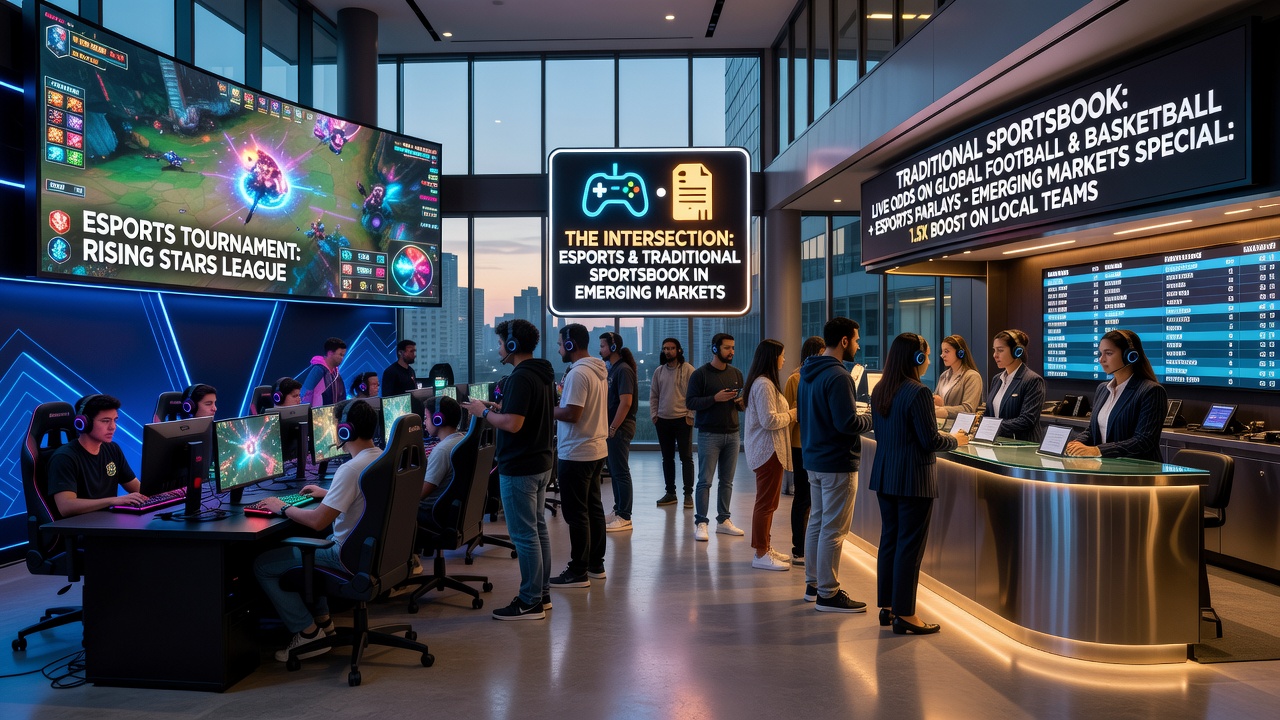
The Intersection of Esports Tournaments and Traditional Sportsbook Offerings in Emerging Markets
Esports tournaments have expanded rapidly across emerging markets in Latin America, Southeast Asia, and parts of Africa, while traditional sportsbooks have begun incorporating dedicated esports betting categories into their platforms. This development creates new wagering options tied to events such as League of Legends World Championships qualifiers and Mobile Legends tournaments held in Brazil and the Philippines. Data from regional operators shows that esports betting volumes in these areas grew by 28 percent between 2024 and 2025, driven by improved internet infrastructure and increased smartphone penetration.
Traditional sportsbooks operating in markets like Colombia and Vietnam have added real-time odds on esports matches alongside football and basketball lines. These platforms use the same account infrastructure for both categories, which allows bettors to move between conventional sports and competitive gaming events without opening separate accounts. Operators report that session lengths increase when esports markets remain available during late-night hours that align with tournament schedules in different time zones.
Market Expansion Patterns Observed in 2026
By June 2026 several operators in Brazil had secured licenses under the updated sports betting framework that explicitly permits esports categories. The Brazilian Ministry of Finance published guidelines requiring operators to maintain separate risk-management protocols for esports events because of their shorter match durations and higher volatility compared with traditional sports. Similar regulatory adjustments appeared in Malaysia, where the Ministry of Finance expanded the scope of permitted gaming products to include esports derivatives.
Observers note that live streaming partnerships between tournament organizers and sportsbook platforms have become common. Viewers in Indonesia and Nigeria can place wagers directly through embedded interfaces on official broadcast feeds, a feature that emerged after technical integrations completed in early 2025. These integrations rely on application programming interfaces that update odds within seconds of in-game developments such as objective captures or player eliminations.
Technical and Operational Integration Methods
Sportsbooks achieve integration by licensing data feeds from esports analytics providers that track metrics including kill-death ratios, gold differentials, and map win probabilities. These feeds feed into proprietary algorithms that generate micro-markets lasting under two minutes, which appeal to users who prefer rapid outcomes. In emerging markets where data costs remain a consideration, operators optimize these feeds to function on lower bandwidth connections without interrupting the betting flow.
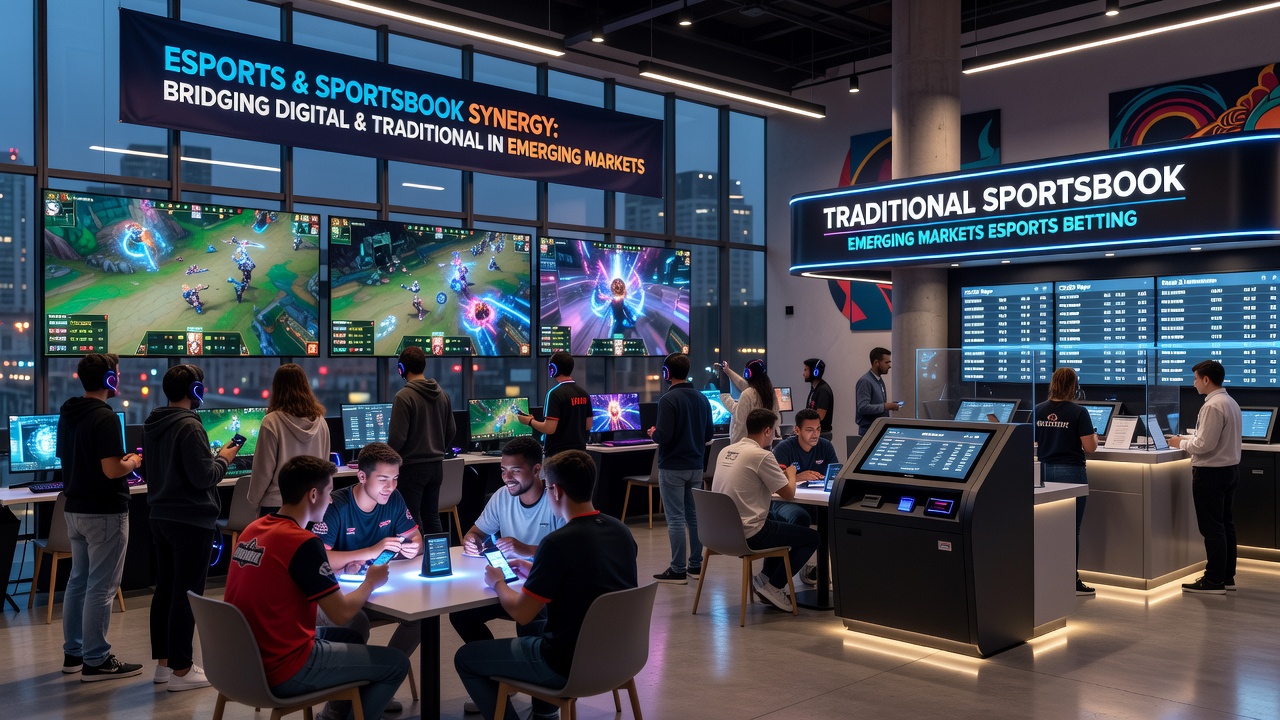
Payment systems already established for conventional sports wagers have been extended to esports bets. Local operators in Kenya and Thailand accept the same mobile money channels for both categories, which reduces friction for users who previously relied on cryptocurrency wallets for esports-only platforms. Transaction logs from major providers indicate that average deposit sizes for combined sports and esports accounts exceed those of single-category accounts by approximately 15 percent.
Regulatory Developments Across Regions
Regulators in emerging markets have approached esports betting with frameworks adapted from existing sports wagering rules. South Africa’s National Gambling Board issued clarifying notices in late 2025 that placed esports under the same licensing tier as horse racing and football, requiring operators to demonstrate responsible gambling tools tailored to younger demographics that dominate esports viewership. In India, state-level discussions in Maharashtra and Tamil Nadu have referenced esports betting as part of broader online gaming legislation expected to advance during the second half of 2026.
Industry associations such as the Asian Interactive Gaming Association have published compliance toolkits that help operators align esports offerings with advertising restrictions and age-verification standards already applied to traditional sportsbooks. These toolkits emphasize segmentation of marketing campaigns to avoid targeting users below legal betting ages, a requirement reinforced through platform-level controls that restrict account creation based on government-issued identification.
Data Trends and Participation Metrics
Participation data collected through operator dashboards shows that esports betting attracts a higher proportion of first-time sportsbook users in emerging markets than traditional sports categories alone. In Colombia, for example, 34 percent of new accounts opened between January and May 2026 placed at least one esports wager within their first week. Average wager frequency per user sits at 4.2 bets per week for esports compared with 2.8 for football, though individual stake sizes remain smaller on average.
Research conducted by the University of Cape Town’s gaming studies unit found correlations between tournament prize pools and betting turnover spikes in African markets. When prize pools exceeded $500,000, wager volumes on associated matches increased by factors between 1.8 and 2.3 within 48 hours of the event announcement. These patterns hold across both mobile and desktop platforms, indicating consistent user behavior regardless of access device.
Future Infrastructure Requirements
Continued expansion depends on reliable low-latency data connections and standardized tournament data formats. Emerging-market operators have begun investing in edge servers located near major tournament venues to reduce odds-update delays that previously reached three seconds during peak viewership. Government telecommunications agencies in Vietnam and Brazil have prioritized spectrum allocation for 5G networks that support these requirements, with rollout milestones scheduled through 2027.
Conclusion
The intersection of esports tournaments and traditional sportsbook offerings in emerging markets rests on shared technological infrastructure, aligned regulatory treatment, and measurable user overlap. As licensing regimes continue to mature and data integration improves, operators maintain records showing steady growth in combined-category accounts. Regulatory bodies across multiple jurisdictions track these developments through required reporting, while participation metrics continue to evolve alongside tournament calendars scheduled through the remainder of 2026 and beyond.