Interface Customization Trends Driving Longer Sessions in North American Digital Table Games
Logan Patterson · Jul 25, 2026
Interface Customization Trends Driving Longer Sessions in North American Digital Table Games
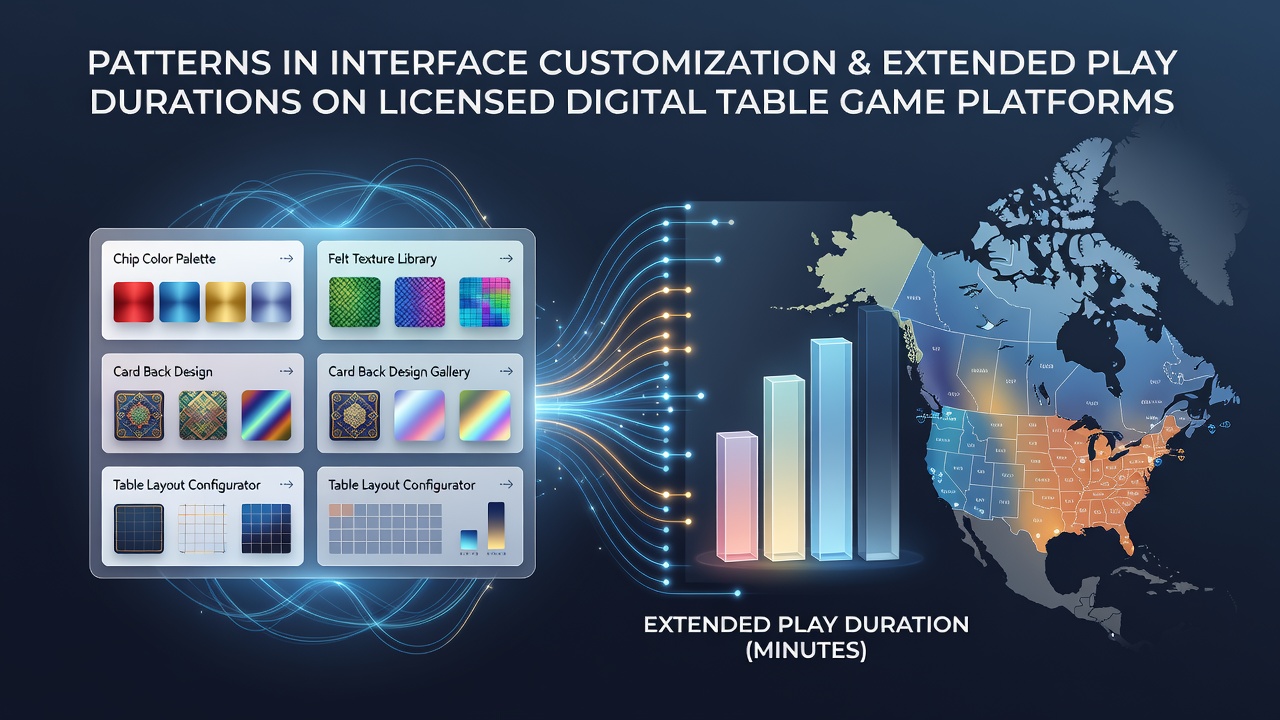
Digital table game platforms licensed in North American jurisdictions have expanded interface customization options over the past few years, and operators report measurable connections between these features and session lengths. Players in regulated markets such as New Jersey, Pennsylvania, Michigan, Ontario, and British Columbia encounter tools that adjust color palettes, rearrange control panels, modify sound profiles, and save preferred layouts for games like blackjack, roulette, and poker variants. Data collected through platform analytics indicate that accounts using at least three customization settings maintain active sessions 18 to 27 percent longer than those relying on default configurations.
Regulatory filings submitted to state and provincial gaming commissions through the first half of 2026 show consistent patterns. In Ontario, the Alcohol and Gaming Commission of Ontario documented average session durations rising from 47 minutes to 61 minutes on platforms that enabled persistent user profiles for interface changes. Similar records from the New Jersey Division of Gaming Enforcement tracked comparable increases among users who adjusted bet placement grids or toggled between light and dark modes during peak evening hours.
Customization Features Commonly Offered
Most licensed platforms provide a core set of adjustments that allow players to tailor visual and auditory elements without altering game rules or payout structures. These include draggable card positioning, selectable chip designs, background scene swaps, and volume sliders tied to individual game events. Developers integrate these options into both browser-based and mobile applications to comply with accessibility guidelines issued by North American regulators. Research compiled by the International Gaming Institute at the University of Nevada, Las Vegas, links the availability of such granular controls to reduced interface friction, which in turn correlates with extended engagement periods across multiple table game categories.
Operators have introduced profile-saving functions that remember user preferences across devices, and July 2026 platform updates in Pennsylvania and Michigan further streamlined this process by adding cloud-synced presets. Players who activate these memory features return to customized setups within seconds rather than resetting layouts each session, a change that internal telemetry shows reduces early exits by roughly one in five users.
Regional Data Patterns Across Jurisdictions
Cross-border comparisons reveal subtle differences in how customization uptake influences play duration. Ontario platforms, which adopted mandatory user-account customization dashboards in 2024, recorded the highest adoption rate at 64 percent of active table game accounts by spring 2026. In contrast, Michigan operators reported 49 percent adoption, yet those users still posted session extensions averaging 22 minutes above baseline figures. British Columbia data, drawn from reports filed with the provincial gaming authority, indicate that sound-profile adjustments alone accounted for a 14-minute average increase when paired with visual theme selections.
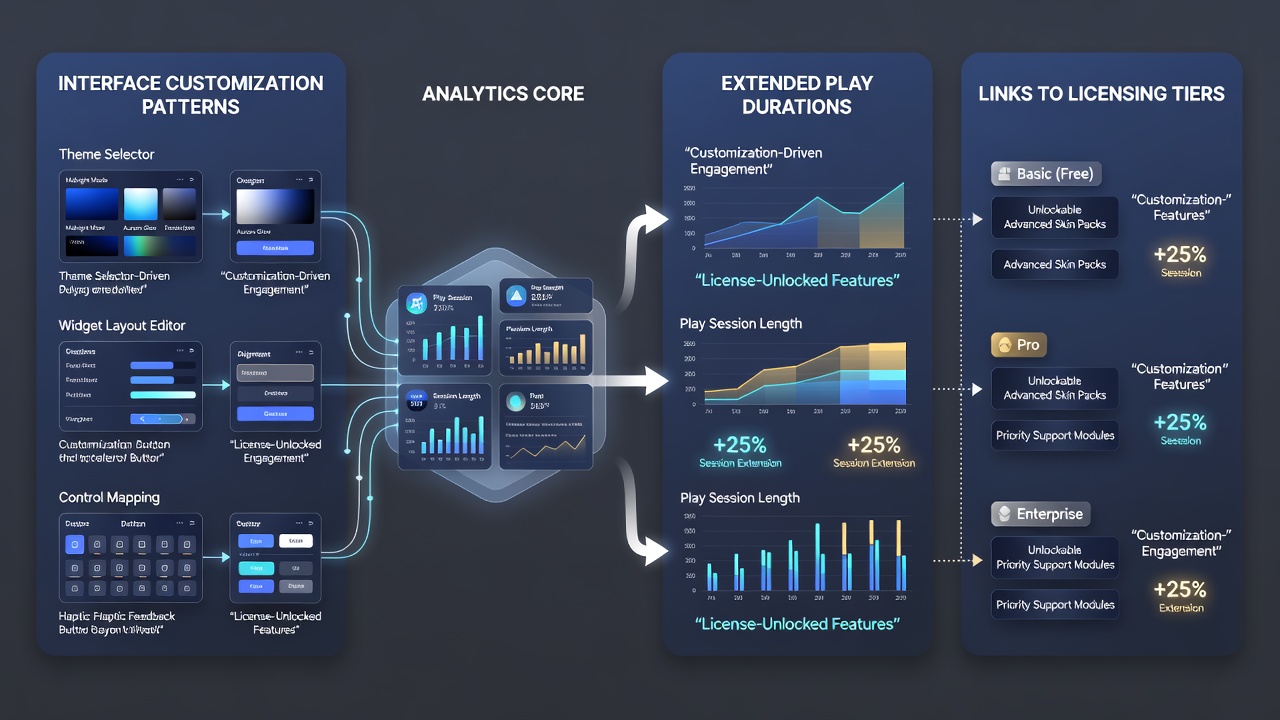
These regional variations align with differences in regulatory emphasis on responsible gaming tools. Jurisdictions requiring visible session-time reminders often see customization used alongside those prompts, creating combined effects on duration that exceed either factor alone. Analysts note that table game verticals benefit more from layout tweaks than slot-style games because decision points occur at slower intervals, allowing players to refine their view mid-session without disrupting flow.
Links Between Specific Options and Engagement Metrics
Platform operators track individual feature usage against session timestamps. Color-scheme changes rank highest in correlation strength, followed closely by control-panel repositioning and ambient-sound toggles. One multi-state operator aggregated data across New Jersey, Pennsylvania, and Michigan licenses and found that accounts employing all three options logged sessions exceeding 90 minutes at a rate 31 percent higher than accounts using none. The same dataset showed no statistically significant difference in wager size per hand, suggesting the extension stems from comfort and reduced cognitive load rather than increased risk exposure.
Academic researchers examining anonymized telemetry from Canadian platforms reached parallel conclusions. Their analysis, covering activity from January through June 2026, identified that saved layout profiles reduced menu-navigation time by an average of 8.4 seconds per decision cycle. Over the course of a 60-minute session, this accumulated efficiency translated into additional hands or rounds completed before voluntary exit.
Conclusion
Patterns emerging from licensed North American digital table game platforms demonstrate that interface customization options correspond with extended play durations when measured across multiple jurisdictions. Regulatory records, operator analytics, and academic reviews converge on similar findings: greater user control over visual and auditory settings aligns with longer active periods without altering core game mathematics. As platforms continue to refine these tools in response to both player preferences and compliance requirements, the observed relationships between customization depth and session length remain consistent through mid-2026 data.