How Weather Data Analytics Guide Strategic Wager Adjustments in International Horse Racing Circuits
Logan Patterson · Aug 20, 2026
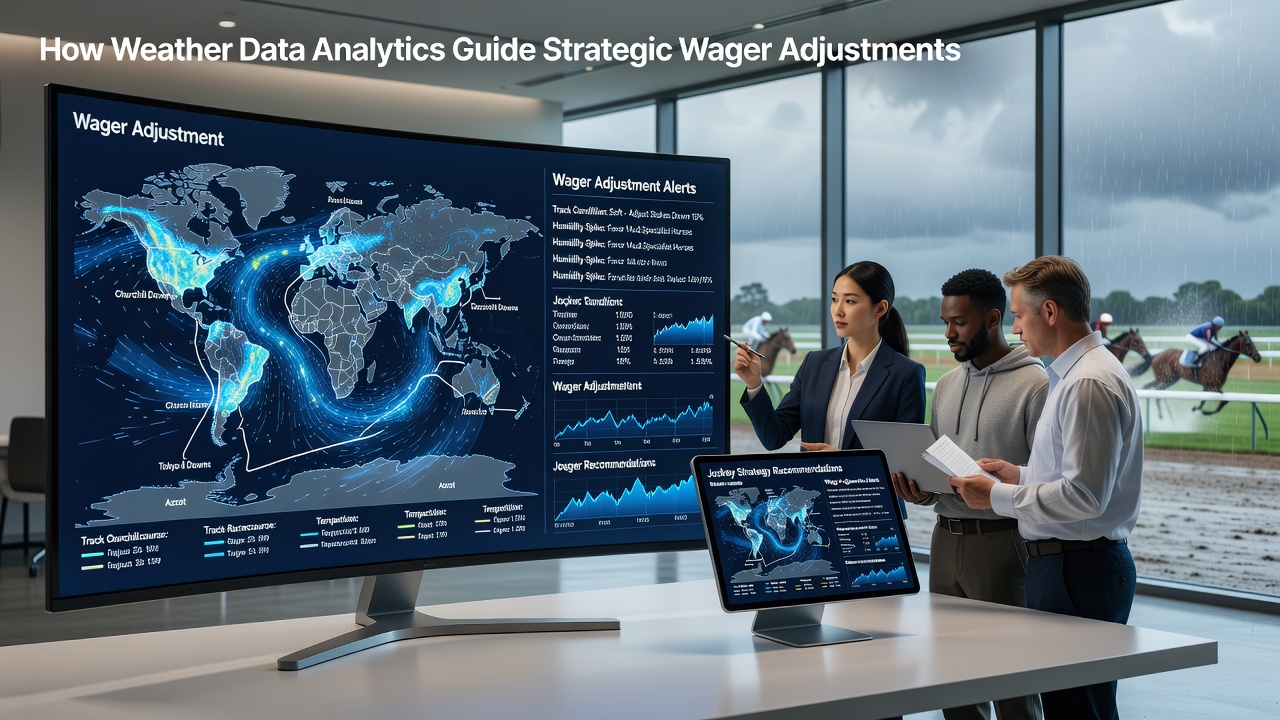
How Weather Data Analytics Guide Strategic Wager Adjustments in International Horse Racing Circuits
Weather conditions shape race outcomes across global circuits because track surfaces respond directly to temperature shifts, rainfall amounts, and wind patterns, while horses exhibit measurable performance changes under varying humidity levels and precipitation. Data analytics platforms now integrate real-time meteorological feeds with historical performance records so bettors and analysts can recalibrate wager strategies before each meeting.
Track Surface Responses to Meteorological Variables
Moisture content in turf and dirt tracks alters footing speed ratings within hours of rainfall, and analysts track soil penetration resistance alongside evaporation rates to forecast how quickly a course will dry. International venues maintain sensor arrays that record these variables continuously, feeding information into models that predict pace scenarios for different post positions. In circuits where synthetic surfaces predominate, thermal expansion coefficients influence cushion depth, requiring separate algorithms that account for ambient heat accumulation during daylight hours.
Regional Climate Patterns and Circuit-Specific Adjustments
Australian tracks experience rapid drainage after summer storms, yet residual subsurface moisture often favors stamina horses in longer distances, prompting wager shifts toward runners with proven wet-track pedigrees. European meetings contend with persistent drizzle that compacts grass and reduces kickback, altering preferred running styles for certain bloodlines. North American dirt circuits show pronounced speed biases after prolonged dry spells followed by brief showers, because the resulting sealed surface rewards early leaders. Observers note that these regional differences necessitate localized data sets rather than universal models.
Integration of Forecast Models with Performance Databases
Analytics teams combine numerical weather prediction outputs from meteorological agencies with equine biometric records, including stride length measurements and recovery heart rates recorded under similar past conditions. Machine learning classifiers identify correlations between wind direction at the final turn and finishing margins for individual horses, allowing probability adjustments that feed directly into betting software. During the August 2026 racing calendar, several major circuits incorporated updated ensemble forecasts that refined humidity projections three days ahead, enabling earlier wager repositioning on turf events.

Those who study these systems report that precipitation probability thresholds trigger automated alerts when projected rainfall exceeds historical benchmarks for a given venue, prompting reevaluation of pace expectations and surface speed figures. The resulting adjustments appear in real-time odds boards as market participants incorporate the new probabilities.
Strategic Wager Modifications Across Circuits
Bettors adjust place and show probabilities when forecast models indicate crosswinds exceeding 25 kilometers per hour on straightaways, because such conditions disproportionately affect horses with high action or lighter builds. Exacta and trifecta combinations receive revised weightings when temperature drops coincide with known poor performers in cooler conditions, drawing on longitudinal studies that quantify these effects across thousands of races. International syndicates maintain proprietary databases that layer weather variables onto jockey-specific statistics, recognizing that certain riders excel at adapting riding tactics to sudden surface changes.
Data Sources and Validation Methods
Figures from the Australian Bureau of Meteorology supply verified rainfall and wind data for southern hemisphere circuits, while European racing authorities cross-reference national weather services to calibrate their own models. Academic researchers at institutions such as the University of Melbourne equine studies group have published peer-reviewed analyses linking barometric pressure variations to injury incidence on turf, providing additional inputs for risk-adjusted wagering frameworks. Validation occurs through back-testing against archived race results, confirming that model accuracy improves when multiple weather parameters are weighted simultaneously rather than in isolation.
Future Developments in Predictive Integration
Emerging sensor technology now captures microclimate variations within individual racecourse sections, enabling granular forecasts that distinguish rail from center-track conditions. These finer data streams support more precise wager segmentation, particularly in quinella and first-four markets where position-specific advantages become quantifiable. Circuit operators continue to expand partnerships with meteorological organizations to secure higher-resolution forecasts, recognizing that competitive edges in wagering markets depend on the speed and accuracy of weather-derived adjustments.
Conclusion
Weather data analytics have established measurable influence over strategic wager decisions throughout international horse racing by translating meteorological inputs into performance probabilities that markets rapidly reflect. Continued refinement of sensor networks and modeling techniques sustains this integration across diverse climatic zones and surface types, supporting consistent application of evidence-based adjustments wherever races occur.