How Soundscapes Shape Player Focus During Extended Online Poker Sessions
Logan Patterson · May 26, 2026
How Soundscapes Shape Player Focus During Extended Online Poker Sessions
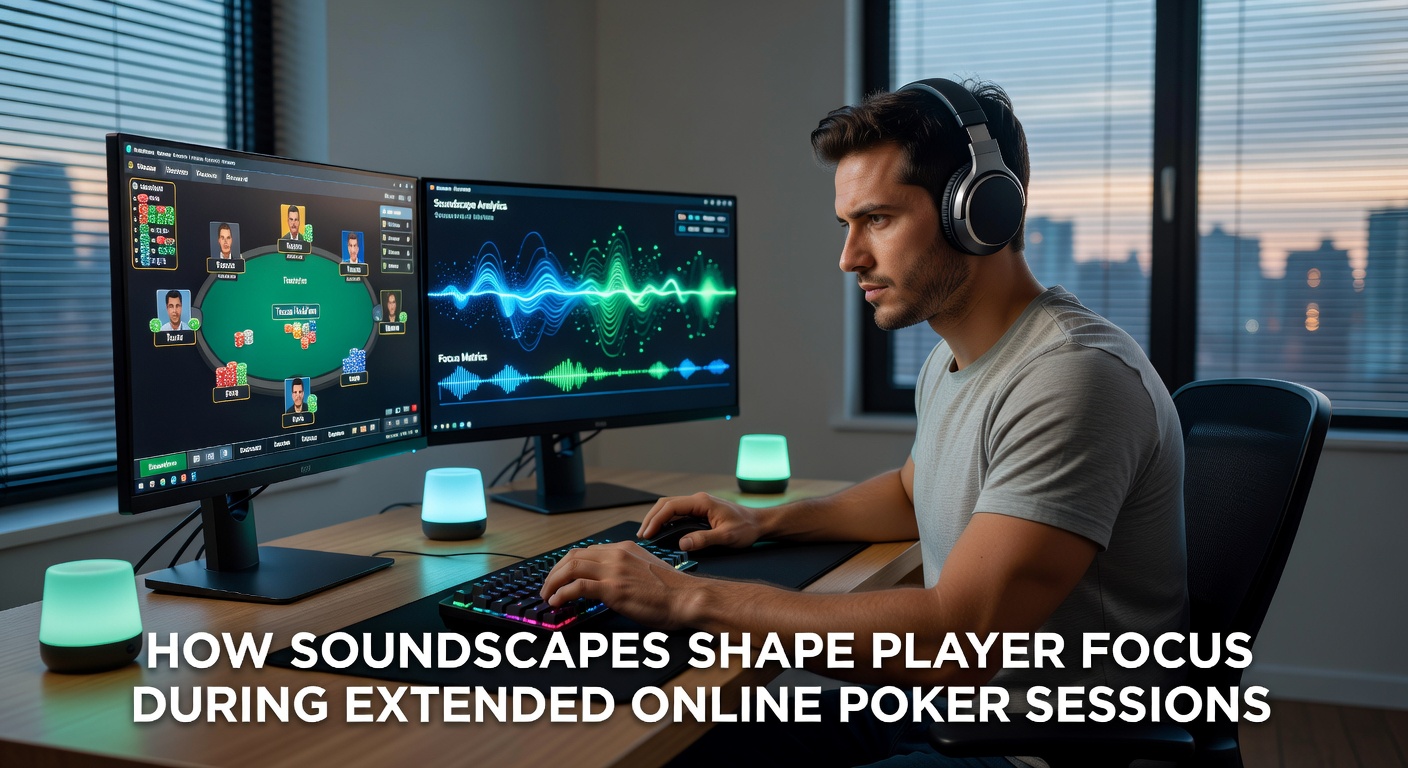
Online poker platforms incorporate layered audio elements that range from subtle chip clicks to ambient room tones, and these soundscapes interact directly with player attention spans during sessions that stretch across several hours. Data from platform analytics shows that auditory design choices influence how participants maintain concentration when facing repeated decision points at virtual tables.
Audio Components in Digital Poker Environments
Modern poker sites layer multiple sound elements including interface notifications, background tracks, and environmental cues that simulate physical casino settings. Researchers at institutions studying digital gaming environments have documented how these layers combine to create consistent auditory feedback loops that players encounter round after round. One analysis of session data from major platforms indicated that users who kept background audio enabled tended to show steadier response times across multi-hour periods compared with those who muted all sounds.
Platform developers adjust volume curves and frequency ranges to avoid abrupt interruptions, and this calibration becomes relevant when players extend their time at the tables. Figures from industry reports reveal that sound design teams test audio sequences against metrics such as decision latency and error rates in simulated long-play scenarios. Those adjustments often target frequencies that align with human auditory processing patterns observed in cognitive studies.
Effects on Sustained Attention
Extended sessions place demands on working memory and pattern recognition, and soundscapes can either support or compete with those cognitive resources. Studies examining auditory environments found that consistent low-level ambient tracks sometimes reduced the perception of time passing, which in turn correlated with fewer voluntary breaks during play. Conversely, irregular or high-intensity sound events occasionally coincided with momentary lapses in focus, particularly when they overlapped with critical betting rounds.
Observations from player behavior logs indicate that many participants toggle audio settings multiple times within a single session, suggesting active management of their auditory surroundings. Data collected across different time zones shows similar patterns, with users in quieter physical locations more likely to retain platform sounds while those in noisy real-world settings frequently lower or disable audio features.
Platform Variations and Design Trends
Different operators approach sound implementation with distinct priorities. Some emphasize realistic casino ambiance through continuous loops of crowd murmurs and dealer prompts, while others favor minimalistic cues limited to action confirmations. A comparative review of software updates released through early 2026 highlighted incremental refinements in spatial audio rendering that allow players to position sound sources within a virtual stereo field.
One notable shift occurred in May 2026 when several North American-facing platforms introduced optional dynamic soundscapes that adjusted intensity based on table activity levels. Usage statistics from those deployments showed that a measurable segment of users activated the feature during sessions exceeding three hours, and retention of audio remained higher among that group than among players using static audio presets.
Academic work on auditory masking has informed some of these design decisions. A research team at an Australian university examined how controlled background noise can shield against external distractions, and their findings have been referenced in developer discussions about balancing immersion with clarity during extended play. Similar investigations in European cognitive science centers have explored frequency-specific filtering that preserves important game cues while attenuating less relevant tones.
Player Adaptation Strategies
Individuals develop personal approaches to managing audio during long sessions. Some rotate between different preset sound profiles offered by their chosen platform, while others combine platform audio with external tracks through separate applications. Session recordings analyzed by research groups indicate that players who maintain consistent audio settings across multiple sessions often demonstrate more stable decision quality metrics than those who frequently switch configurations.
Hardware choices also factor into the equation. Headphone users report different auditory experiences compared with those relying on device speakers, particularly regarding spatial separation of sound elements. Industry surveys conducted by gaming equipment associations note rising adoption of noise-isolating headsets among regular online poker participants, correlating with reported improvements in focus duration.
Regulatory and Research Context
Gaming oversight bodies in various jurisdictions have begun requesting data on how platform features, including audio, relate to responsible play indicators. Reports submitted to Canadian provincial regulators, for instance, include breakdowns of session length distributions alongside optional audio usage statistics. Parallel documentation from Australian state agencies tracks similar variables as part of broader player protection monitoring efforts.
These data streams feed into ongoing academic inquiries. A collaborative project involving researchers from multiple countries has compiled cross-platform datasets that examine correlations between soundscape settings and voluntary session termination points. Early outputs from that work suggest that certain audio profiles align with longer continuous play intervals, although causation remains under investigation.
Conclusion
Sound design in online poker continues to evolve alongside improvements in streaming technology and player analytics. The interplay between auditory elements and focus maintenance during extended sessions reflects both technical capabilities and findings from cognitive research. As platforms refine these features and additional studies accumulate, the relationship between soundscapes and player behavior offers a measurable dimension of digital gaming environments that operators and researchers alike continue to examine.