How Server Latency Influences Split-Second Choices in Real-Time Digital Table Environments
Petra Sullivan · Jul 16, 2026
How Server Latency Influences Split-Second Choices in Real-Time Digital Table Environments
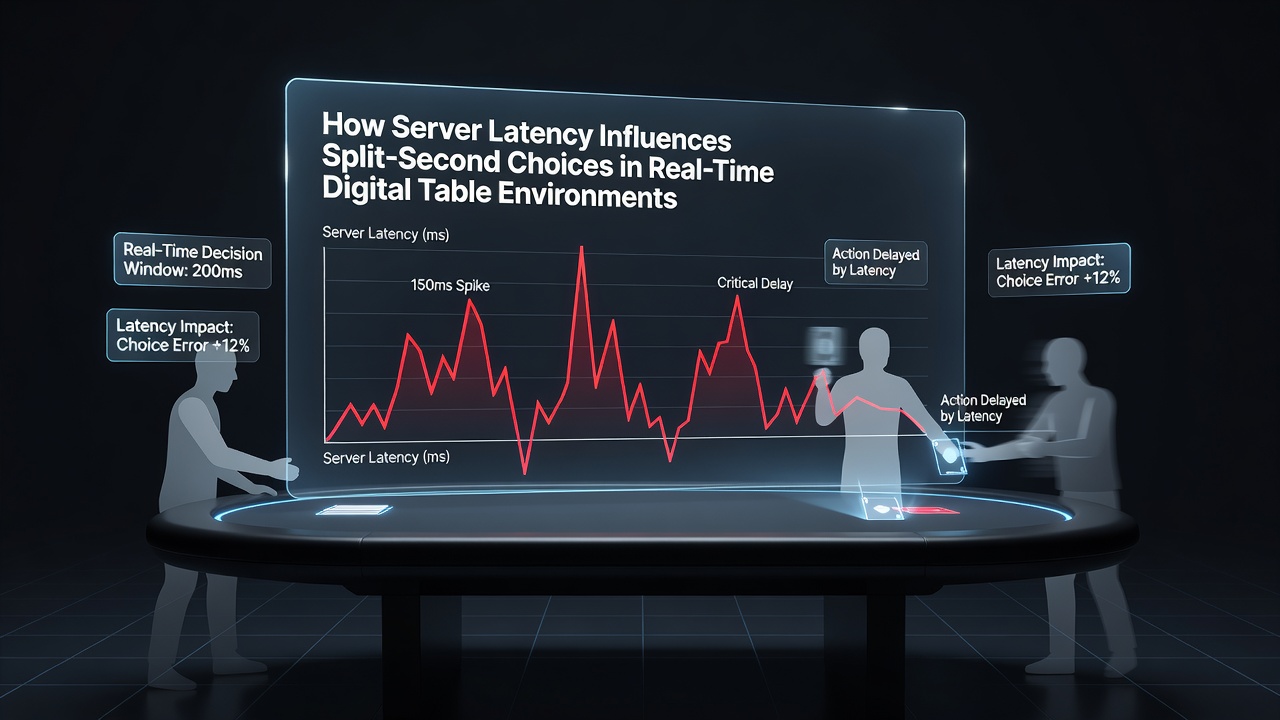
Server latency measures the time it takes for data to travel between a player's device and the central gaming servers that power live dealer tables, virtual poker rooms, and other real-time digital environments, and this delay directly shapes how participants respond when every millisecond counts. In these settings players must make rapid choices such as folding a marginal hand or hitting on a borderline total, while the system processes bets and reveals cards across distributed networks. Research from the University of Nevada's gaming technology lab indicates that average latencies above 50 milliseconds begin to alter decision accuracy in simulated blackjack sessions, as participants receive delayed visual and audio cues from the dealer feed.
Digital table platforms rely on synchronized streams that combine video, card data, and betting interfaces, yet packet loss or routing inefficiencies can stretch response windows beyond the typical human reaction threshold of 200 to 300 milliseconds. Observers note that professional players often adjust their timing strategies when they detect consistent delays, shifting from aggressive early actions to more conservative waits that account for the lag buffer. Data collected across North American online poker networks during the first half of 2026 shows session lengths shortened by an average of 12 percent in regions experiencing peak evening traffic spikes, because repeated micro-delays compound into noticeable friction during multi-hand sequences.
Network Mechanics Behind Real-Time Table Play
Real-time digital tables operate through edge servers positioned closer to player clusters, yet the final hop to the central game engine still introduces variable latency depending on geographic distance and ISP routing. When a player places a bet or signals an action the command travels through multiple nodes before the server registers it and broadcasts the outcome back, creating a round-trip delay that can range from 20 milliseconds in optimal fiber connections to over 150 milliseconds on congested mobile networks. Engineers at major platform operators deploy predictive algorithms that pre-load possible card outcomes and interface states to mask some of this lag, though these systems cannot fully eliminate the gap when network conditions degrade suddenly.
Studies conducted by the Canadian Institute for Gaming Research reveal that jitter, or variation in latency, disrupts player rhythm more than steady delay because it prevents consistent anticipation of when the next update will arrive. Participants in controlled tests reported higher error rates during split-second calls like insurance bets or all-in decisions when jitter exceeded 30 milliseconds, even if the average latency remained moderate. Platform logs from July 2026 confirm that operators increased their use of dedicated gaming-optimized routes during major sporting events, reducing average jitter by 18 milliseconds across European and Asian player pools.
Impact on Player Decision Patterns
Split-second choices in digital table environments involve both cognitive processing and motor response, and latency inserts an artificial pause between perception and action that can shift outcomes in probability-heavy games. Take one documented case where analysts examined 2.4 million poker hands from a regulated North American site: hands played under latency conditions above 80 milliseconds showed a 7 percent increase in fold frequency on the river compared with low-latency sessions, suggesting players defaulted to safer actions when uncertain about timing synchronization. Researchers attribute this pattern to the brain's tendency to treat delayed feedback as incomplete information, prompting more cautious behavior.

Blackjack players face similar pressures when deciding whether to double down or stand, because the dealer animation and card reveal must align with their input for the experience to feel seamless. Figures released by the Nevada Gaming Control Board in mid-2026 tracked complaint volumes related to timing disputes and found a correlation with regional latency reports, although actual rule violations remained rare due to server-side validation that accepts actions within a defined grace window. Those who have reviewed thousands of session replays observe that experienced players develop compensatory habits, such as hovering over action buttons earlier or using keyboard shortcuts to reduce the final transmission delay.
Technological Mitigations and Industry Responses
Operators address latency through a combination of content delivery networks, regional game servers, and client-side prediction models that simulate likely outcomes while awaiting confirmation. The Australian Communications and Media Authority has documented how these approaches lowered average dispute rates in licensed online environments during the 2025-2026 fiscal year, particularly for table games requiring continuous dealer interaction. Yet complete elimination remains impossible because physics imposes minimum travel times across continents, forcing designers to build tolerance windows into game rules rather than relying solely on faster infrastructure.
Adaptive interfaces now display connection quality indicators that warn players when latency enters ranges known to affect accuracy, allowing them to pause or switch tables before critical hands begin. Industry reports from the European Gaming and Betting Association highlight that platforms incorporating real-time latency feedback saw retention rates stabilize during periods of network strain, because informed participants adjusted expectations rather than attributing poor results to system faults. Developers continue testing machine-learning models that anticipate player actions based on historical patterns, pre-sending likely commands to the server in advance of the actual button press.
Conclusion
Server latency remains an inherent factor in real-time digital table environments because it stems from the physical limits of data transmission across global networks, and its influence on split-second choices continues to drive both technical innovation and player adaptation. Measurements from multiple regulatory jurisdictions show measurable effects on decision timing and accuracy once delays surpass certain thresholds, prompting ongoing refinements in server architecture and interface design. As connectivity standards evolve through 2026 and beyond, the relationship between network performance and gameplay precision will stay central to how these platforms maintain fairness and engagement across diverse player locations.