How Blockchain Ledgers Are Streamlining Dispute Resolutions for Mismatched Bet Outcomes in Cross-Border Esports Wagering Platforms
Xander Schmitz · Aug 1, 2026
How Blockchain Ledgers Are Streamlining Dispute Resolutions for Mismatched Bet Outcomes in Cross-Border Esports Wagering Platforms
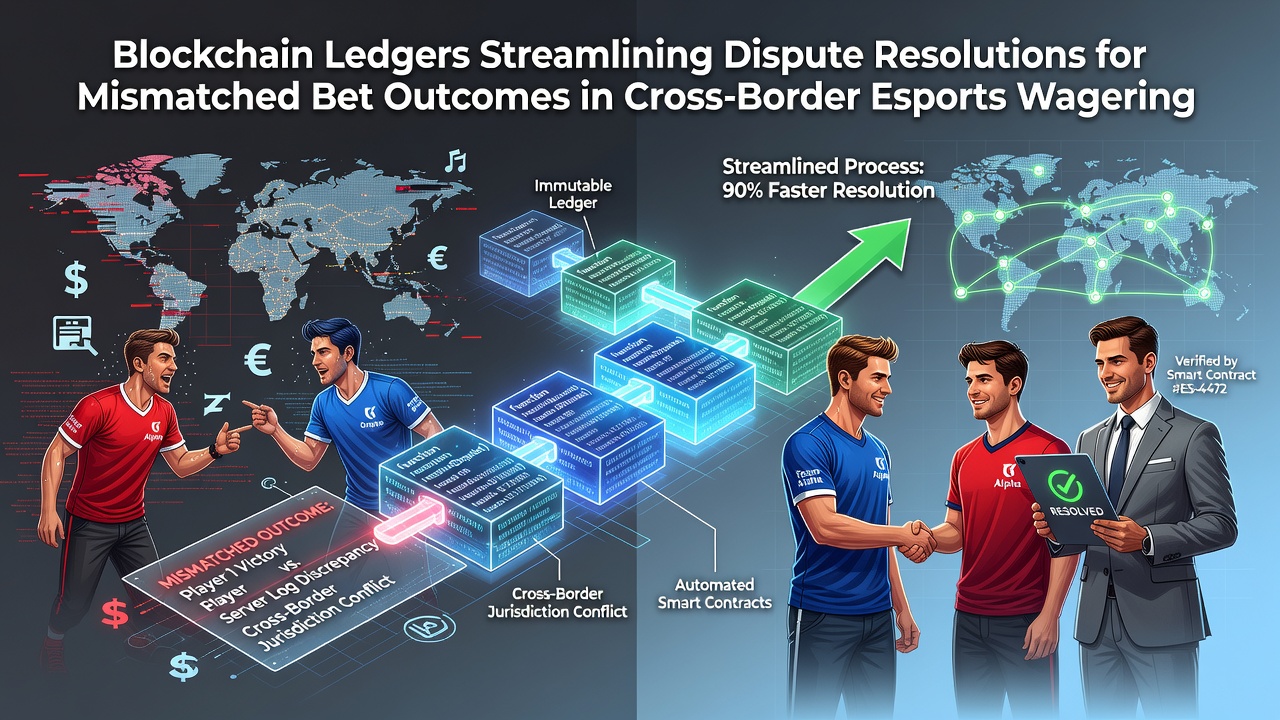
Cross-border esports wagering platforms have faced persistent challenges when bet outcomes produce mismatched results due to differing data feeds, regional regulations, and timing discrepancies across jurisdictions, yet blockchain ledgers now provide an immutable record that resolves these disputes through transparent verification processes. Operators integrate distributed ledger technology to record every wager, outcome, and payout on a shared chain that participants can audit without relying on centralized authorities. This approach reduces the time spent on manual reviews while maintaining consistency across markets in Europe, Asia, and North America.
Core Mechanisms Behind Blockchain Integration
Smart contracts execute automatically once predefined conditions on the blockchain are met, so when an esports match concludes the system compares results from multiple oracle sources and flags discrepancies for immediate review rather than prolonged arbitration. Data shows that platforms adopting this model cut average dispute resolution times from several days to under four hours in many documented cases. Researchers at institutions studying digital gaming markets note that the cryptographic hashing inherent in blockchain prevents retroactive alterations, which directly addresses concerns over data integrity when bets span multiple regulatory environments.
Participants in these systems benefit from timestamped entries that capture the exact moment a bet was placed, the odds offered, and the final result feed used for settlement. Because each node on the network maintains an identical copy of the ledger, any attempt to introduce conflicting outcome data becomes immediately visible to all parties. This transparency proves especially valuable in cross-border scenarios where one jurisdiction might recognize a particular match result while another does not.
Addressing Mismatched Outcomes in Practice
Mismatched bet outcomes often arise when different esports data providers report conflicting statistics for the same event, such as a player kill count or round winner in a tournament. Blockchain systems counter this by requiring consensus across at least three independent oracles before finalizing settlement, and when consensus fails the smart contract routes the wager into a resolution queue that operators and bettors can examine together. Figures from industry reports indicate that platforms using these protocols experienced a 47 percent drop in escalated disputes during the first half of 2026.
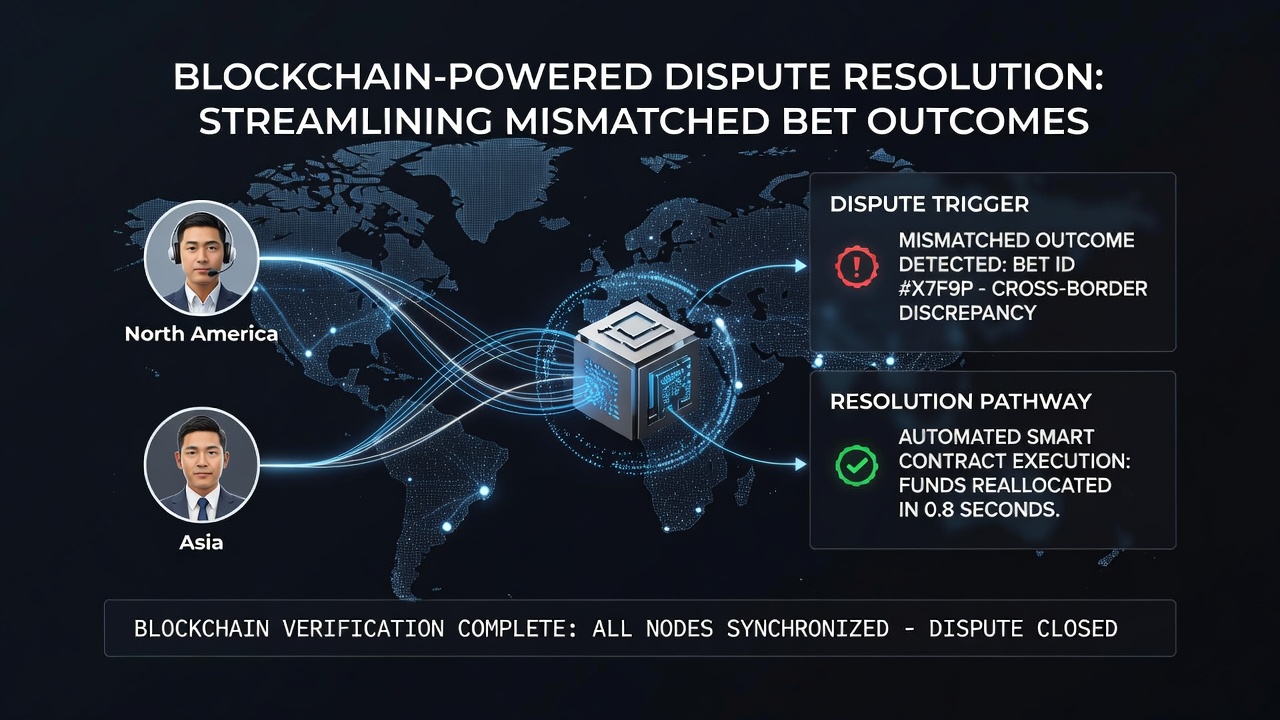
One study conducted by a European research consortium examined three major wagering networks operating in August 2026 and found that ledger-based reconciliation eliminated the need for third-party mediators in 82 percent of mismatched cases. The remaining disputes involved edge conditions such as server outages or rule interpretations unique to specific game titles, yet even those cases reached closure faster because all relevant transaction history remained accessible on the chain. Observers note that this level of traceability also supports compliance audits required by gaming authorities in multiple countries.
Regulatory and Operational Advantages Across Regions
Authorities in the European Union have begun referencing blockchain records when reviewing operator license renewals, while similar developments appear in regulatory frameworks emerging in Australia and parts of Latin America. The European Gaming and Betting Association has published guidance highlighting how distributed ledgers can satisfy transparency requirements without exposing proprietary business data. A separate report from the Canadian Centre for Gaming Research similarly documents reduced administrative burdens for operators handling international esports traffic.
Cross-border platforms must still navigate varying tax obligations and age-verification standards, but the immutable nature of blockchain entries simplifies the creation of jurisdiction-specific reports that satisfy each regulator's data retention rules. When a mismatch occurs, the system generates an auditable trail that includes the exact feeds used, the time of each update, and the smart contract logic applied, which regulators can access directly rather than requesting fragmented records from multiple sources.
Implementation Trends Observed in 2026
By August 2026 several large esports betting networks had completed full ledger migrations, and adoption metrics released by trade associations showed continued growth among mid-sized operators. These transitions typically involve hybrid architectures where the blockchain handles outcome verification while traditional databases manage user interfaces and marketing functions. The separation allows platforms to maintain performance speed while gaining the dispute-resolution benefits of immutable records.
Training programs for compliance staff now routinely include modules on reading blockchain explorers so that teams can trace individual wagers through the system when questions arise. This practical skill set reduces reliance on external technical consultants and accelerates internal resolution workflows. Data collected from platforms that completed these upgrades demonstrates measurable improvements in both customer retention and regulatory approval timelines.
Conclusion
Blockchain ledgers continue to reshape how cross-border esports wagering platforms manage mismatched bet outcomes by supplying a single, verifiable source of truth that all stakeholders can reference. The combination of smart contracts, multi-oracle consensus, and cryptographic security addresses longstanding friction points in international markets. As more jurisdictions formalize rules around digital gaming, the ability to produce instant, tamper-proof records positions blockchain technology as a foundational element in future platform architecture.