How Biometric Feedback Devices Are Reshaping Strategy Development for Blackjack Players in Online Settings
Bianca Franke · Jul 18, 2026
How Biometric Feedback Devices Are Reshaping Strategy Development for Blackjack Players in Online Settings
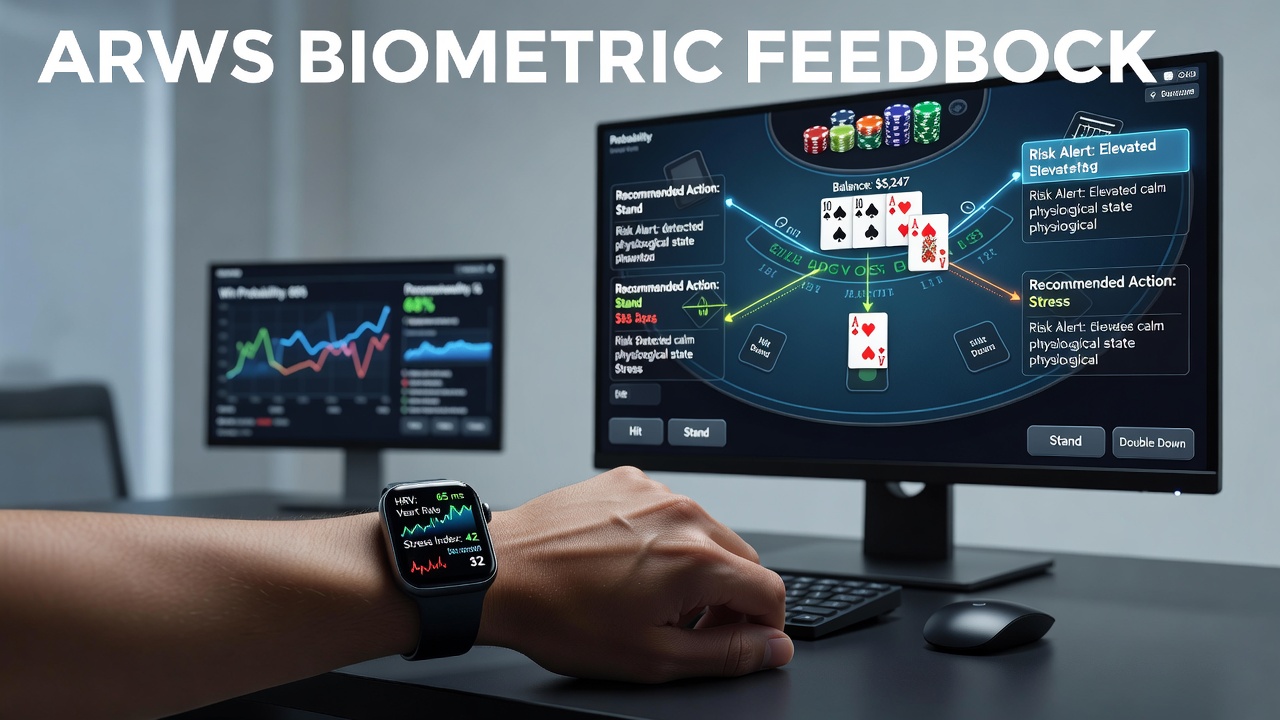
Biometric feedback devices have entered online blackjack environments through wearable sensors and integrated software platforms that capture heart rate variability, skin conductance, and eye movement patterns during live dealer sessions. These tools transmit real-time physiological data to companion applications that overlay performance metrics onto hand histories and decision logs, allowing players to examine correlations between stress indicators and specific strategic choices such as hit-or-stand calls or insurance bets. Platforms in regulated markets began rolling out API connections for these devices in late 2025, and by July 2026 several major operators reported measurable increases in session data granularity.
Device Types and Data Collection Methods
Wrist-worn monitors track pulse and electrodermal activity while eye-tracking software through device cameras records fixation points on virtual card layouts. Researchers at the International Gaming Institute have documented how elevated heart rate spikes often coincide with deviations from basic strategy charts during high-stakes hands. The collected datasets feed into analytics dashboards that timestamp each biometric event against specific game actions, creating visual heat maps of emotional responses across different table limits and rule variations.
Integration with Online Platforms
Leading software providers now embed biometric hooks directly into their client applications, so players receive prompts to connect approved wearables before joining tables. Once linked, the system logs every deviation from expected physiological baselines and pairs those moments with outcomes, win rates, and bankroll fluctuations. Data shows that sessions incorporating biometric overlays produce denser decision trees than traditional hand-tracking alone, because the additional layer reveals patterns such as increased risk tolerance following sustained periods of elevated skin conductance.
Strategy Refinement Through Physiological Insights
Players review post-session reports that flag moments when biometric readings diverged from optimal play parameters. One documented case involved a participant whose eye-tracking data revealed repeated glances away from the dealer’s upcard during multi-deck games, correlating with a measurable drop in split decisions. Subsequent adjustments to pre-hand breathing protocols reduced those distractions, and follow-up sessions displayed tighter adherence to expected value calculations. Observers note that such feedback loops accelerate the transition from memorized charts to context-aware adjustments that account for personal stress thresholds.
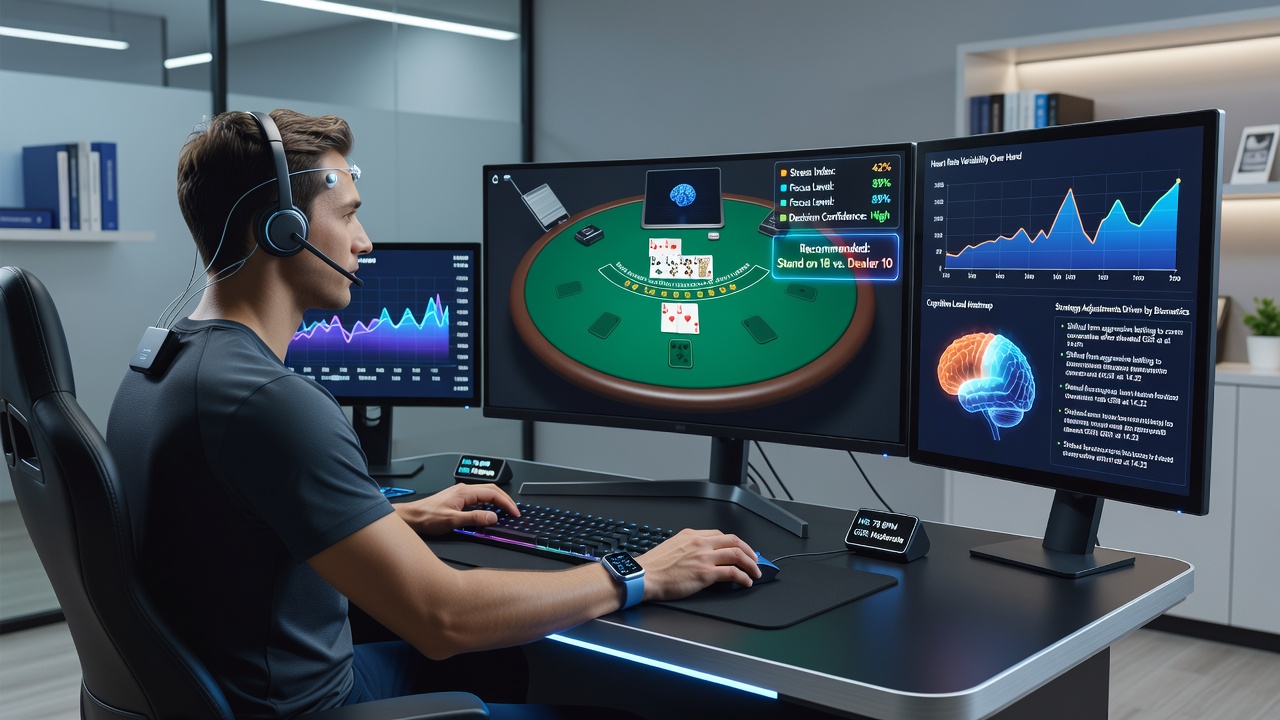
Training modules built around biometric archives let users simulate previous stressful scenarios while wearing the sensors, then compare current readings against historical benchmarks. The approach has gained traction among mid-stakes regulars who previously relied solely on statistical software. Figures from platform operators indicate that users who review biometric-tagged sessions at least three times per week show faster convergence toward consistent positive expected value across varying deck penetration levels.
Regulatory and Data Privacy Considerations
Regulators in multiple jurisdictions require explicit consent protocols before any physiological data leaves a player’s device. The New Jersey Division of Gaming Enforcement updated its technical standards in early 2026 to mandate encryption of all biometric streams and anonymized aggregation for operator analytics. Similar guidelines from the Australian Communications and Media Authority emphasize player control over data retention periods, ensuring that feedback remains a voluntary enhancement rather than a mandatory monitoring feature.
Emerging Trends in Player Adoption
Industry reports compiled through June 2026 show steady uptake among players aged 25 to 40 who already use fitness trackers in daily life. Adoption appears highest in markets where operators offer discounted device bundles or loyalty points for consistent data sharing. Those who’ve incorporated the tools describe sessions that feel more structured, with clear markers for when fatigue or distraction begins to influence choices. Academic studies continue to examine whether these patterns translate into measurable reductions in chasing behavior during downswings.
Challenges in Measurement Accuracy
Environmental variables such as ambient lighting and internet latency can introduce noise into eye-tracking and reaction-time measurements. Developers address these issues through calibration routines performed at the start of each session and cross-referencing multiple sensor streams to filter outliers. Despite these refinements, researchers caution that individual baseline differences require personalized thresholds before any automated strategy recommendations are generated.
Conclusion
Biometric feedback devices supply an additional data dimension that online blackjack players combine with traditional hand histories and statistical models. As integration standards mature and regulatory frameworks stabilize, the technology continues to supply granular insight into how physiological states intersect with strategic decisions across different game formats and stake levels.